A few summers ago I watched a single clump of wild bergamot in my backyard pull in bumblebees, a hummingbird moth, and at least three species of butterflies within the span of an hour. That’s when it clicked for me – the fastest way to turn a yard into a living ecosystem isn’t fancy landscaping or expensive nursery stock. It’s planting flowers that evolved alongside the insects and birds in your specific region. Native plants and native pollinators have spent thousands of years working out an arrangement, and when you bring that arrangement into your own garden, the results show up almost immediately.
Pollinator populations in the U.S. have been under real pressure – monarch butterfly numbers have dropped by more than 80% in some monitored populations over the past two decades, and wild bee diversity is shrinking in many states due to habitat loss. A home garden won’t reverse that trend on its own, but thousands of gardens planted with intention add up to real habitat corridors. Here’s how to build one that actually works.
Why native flowers matter more than generic “bee-friendly” mixes
Walk into any garden center in spring and you’ll see seed packets labeled “pollinator mix” or “bee blend.” Many of these contain a jumble of plants from Europe or Asia that bees will visit, sure, but that don’t support the full life cycle of local insects. Here’s the distinction that matters: adult pollinators need nectar, but their larvae often need something much more specific.
Monarch caterpillars, for instance, can only eat milkweed – nothing else will do. A hundred different butterfly species in North America each rely on a narrow list of host plants for their caterpillars, and most of those host plants are native species that co-evolved with them. A garden full of showy but non-native flowers might look busy with bees, yet offer almost nothing to the next generation of moths and butterflies.
- Native plants typically require less water once established, since they’re adapted to local rainfall patterns.
- They tend to resist regional pests and diseases better than imported cultivars.
- Their bloom times are naturally staggered to match when local pollinators emerge from dormancy.
Choosing flowers that fit your region
There’s no single list of “best pollinator plants” that works from Maine to Arizona – that’s the whole point of going native. What thrives in the Northeast might struggle in the high desert Southwest. A few reliable starting points by region:
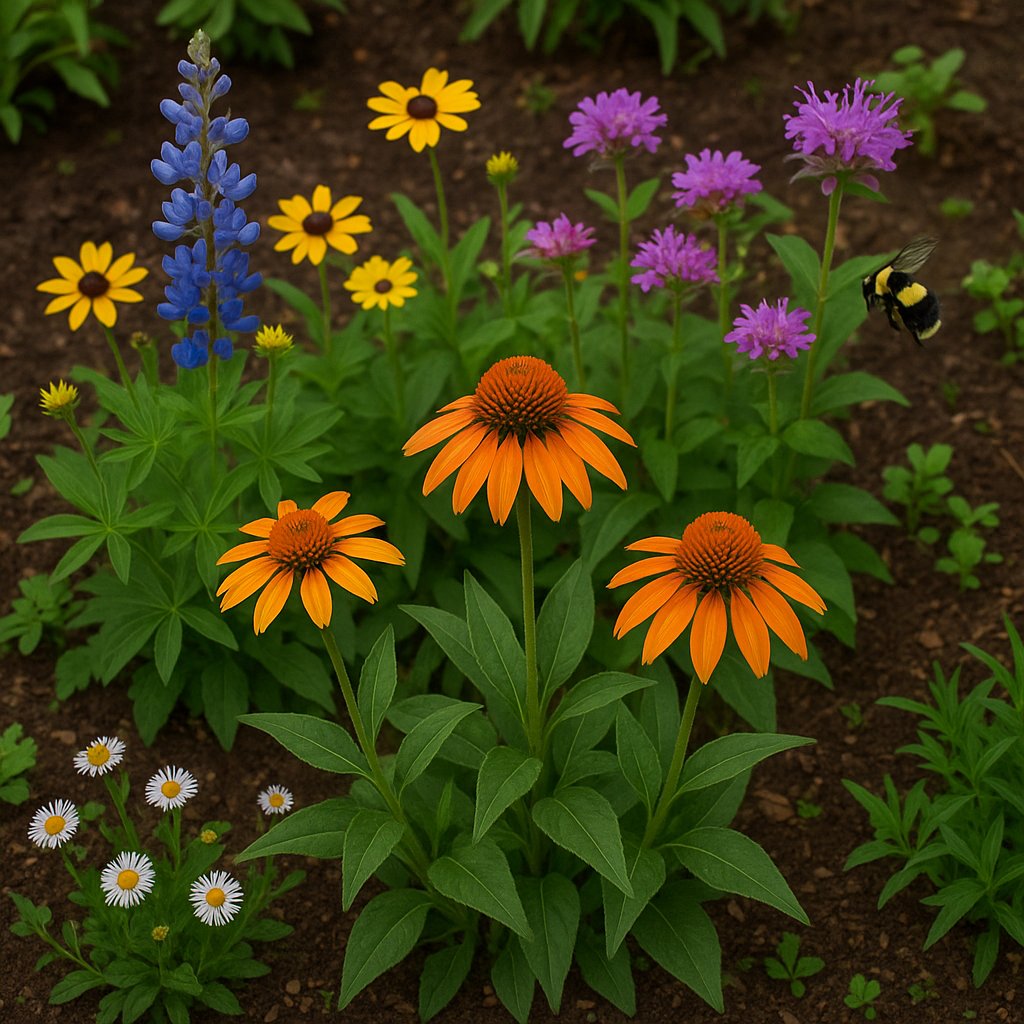
- Northeast and Midwest: purple coneflower, black-eyed Susan, New England aster, wild bergamot, joe-pye weed.
- Southeast: swamp milkweed, blazing star, coreopsis, native passionflower.
- Great Plains and prairie states: prairie blazing star, butterfly milkweed, wild indigo.
- Southwest and desert regions: desert marigold, penstemon species, chuparosa, brittlebush.
- Pacific Northwest and West Coast: California poppy, farewell-to-spring, checkerbloom, native lupine.
Your county’s cooperative extension office or a regional native plant society is worth checking – most maintain free plant lists specific to your soil and climate zone, which saves a lot of trial and error.
Designing for bloom succession, not just beauty
One mistake I see constantly, even among experienced gardeners, is planting only for a single dramatic burst of color in June. Pollinators need food from early spring through late fall, not just during peak bloom season. Bumblebee queens emerge as early as March in many states and need nectar immediately. Late-season migrating monarchs depend on fall-blooming asters and goldenrod to fuel their trip south.
Aim for at least three plants blooming in each of these windows:
- Early spring (March–April): wild columbine, golden ragwort, redbud shrubs.
- Late spring to midsummer (May–July): coneflower, milkweed, bee balm.
- Late summer to fall (August–October): goldenrod, aster, ironweed.
This staggered approach does double duty – it keeps your garden visually interesting for months instead of peaking once and fading, and it prevents the “nectar gap” that leaves pollinators searching for food during lean weeks.
Skip the pesticides, even the “organic” ones
This part surprises people. Even organic-labeled insecticides like pyrethrin or spinosad can kill bees and butterfly larvae on contact or through residue. Neonicotinoid-treated nursery plants are another hidden problem – a plant labeled as pollinator-friendly might have been pre-treated with systemic pesticides that make its nectar toxic to bees for weeks or months after purchase. When buying starts rather than seeds, ask the nursery directly whether their stock is neonicotinoid-free.
Beyond flowers: the habitat pieces people forget
Flowers get all the attention, but pollinators need more than nectar to complete their life cycles. A truly functional habitat includes:
- Bare, undisturbed soil patches – roughly 70% of native bee species nest in the ground, not in hives, and a garden covered wall-to-wall in mulch leaves them nowhere to burrow.
- Dead wood or hollow plant stems – leave some perennial stems standing over winter instead of cutting everything back in fall; many native bees overwinter inside them.
- A shallow water source – a dish with pebbles and a bit of water gives bees and butterflies a safe place to drink without drowning.
- Sunny, wind-sheltered spots – pollinators are cold-blooded and need warm, calm areas to bask and forage efficiently.
I’ll admit I used to tidy up my flower beds every October out of habit, cutting everything down to neat stubs. Once I learned that overwintering bees were relying on those hollow stems, I switched to waiting until mid-spring for cleanup. The garden looks a little messier through winter, but the bee activity the following summer noticeably increased.
Small space, big impact
You don’t need acreage to make a difference. Container gardens on balconies, small raised beds, or even a strip along a driveway can function as pollinator habitat if planted densely with native species. Clustering three to five plants of the same species together, rather than scattering single specimens throughout a bed, also helps – pollinators forage more efficiently when they can visit multiple blooms of one type without flying far between them.
Where this leaves your garden – and the bigger picture
Building a pollinator-friendly garden isn’t a one-season project; it’s more like a slow negotiation with your local ecosystem. Start with a handful of regionally native flowers, stagger their bloom times, skip the pesticides, and leave a little wildness in the corners – bare soil, standing stems, a shallow water dish. The insects will find it. In my experience, it usually takes about two full growing seasons before a new native garden really hits its stride, so patience matters as much as plant selection.
If you’re ready to go further, look into your state’s native plant society or a regional Xerces Society chapter – both maintain detailed, climate-specific guides that go well beyond what any single article can cover. The plants you choose today are quietly shaping the insect populations your neighborhood will have for years to come.